Showing posts with label commercial design. Show all posts

Friday, November 30, 2012

Retail Sound Design


A well-designed space places importance on engaging all the senses. Upon arrival, a customer is immediately surrounded by a total environment that either actively invites the person to explore the space or unknowingly causes negative perceptions about the store. One aspect of retail design that affects us significantly (often without us even realizing) is the use of sound. The right sound can lead to increased sales, but an an inappropriate sound application can dramatically change customer well-being and purchasing. 
 
What can the right sound do?
1. reinforce store image and branding
2. encourage purchasing and a lengthened shopping time
3. attract specific attention to a product or attract a specific audience to the store
4. entertain the customers and create positive perceptions about the store
 
acoustic materials create opportunities to
enhance store branding and add interest


Carefully chosen background sound in combination with acoustic materials and a professional sound technology system will ensure a positive audial experience for customers.


The following video outlines the ways that sound affects us and
a few ways to consciously provide pleasing sound in a space.


The four Golden Rules
for commercial sound:

1. make it congruent
2. make it appropriate
3.  make it valuable
4. test and test again


Sources: 1, 2, 3, 4
by Jonica Klein  
  

Friday, November 2, 2012

Design Inspires


As we get caught up in everyday work, it is easy to forget how that work can influence people and make a difference. Life stays busy, and new projects bring challenges, but it is important to remember that good design inspires. 

I recently had the opportunity to help design the interiors for the Community School of the Arts in Marion, IN. The CSA is an organization that provides dance, music, and art education classes for members of the community, seeking to enliven and inspire kids through the arts. This project was undertaken by our senior class of interior design students at Indiana Wesleyan University. Through the process of designing this space, which included a lobby cafe, several classrooms, and a theater space, I became increasingly aware of the impact of a well-designed space, a space capable of being an inspiration. 
 
 Creating that final, well-designed space requires a great deal of research and design strategies. Two elements that contribute to the successful design are the recycling and reuse of old materials and the creation of new, useful structures. Reusing existing materials helps reduce the amount of waste during the construction process, lessening the environmental impact. Implementing recycling in a design enables an unused piece of furniture or casework to be seen in a new light. Recycling existing materials also lowers the final cost of a project. In the CSA design, existing casework was relocated to a more functional area of the site. Additionally, existing molding was removed from the second floor and, rather than be wasted, was applied in more applicable spaces on the third floor. Generating a new interior environment, however, cannot be achieved without the proper addition of new built features. New elements mix with existing forms and complete the design. Providing new structures and interior features transforms the remaining space into an enriching and inspirational environment. Prominent new aspects of the CSA include a custom bar in the cafe, unique ceiling and floor features, and an art deco inspired, movable stage for the theater. 
The CSA desires to be a place where children can feel special and gain inspiration for the future; every interior detail adds to that final goal. The various elements merge together and create the overall environment. Individually, it may be just a color, a piece of furniture, or a cabinet, but when combined, it means much more. Never forget that hard work has a purpose and a successful end result provides justification for every minute of the work. Every piece, both new and old, can be part of a design that inspires. Looking back on the final proposed concept for the Marion Community Center of the Arts, I have seen that effective design has the power to improve life and benefit a community. 
 
by Jonica Klein

Friday, October 26, 2012

It's the Holiday Season...

With the holiday season right around the corner--or at some retailers, in full swing--I thought it would be fun to take a look at a few tips for making the most of your retail space's seasonal budget and decor.
  • Window displays are an excellent way to set yourself apart from all the other retailers around you, so take full advantage of the space and get creative! Use your windows to not only sell your products, but to tell the outside world what the inside of your store feels like.
  • If you include merchandise in your displays, if possible, try to make it so that customers feel comfortable shopping from them.
  • To eliminate the need to switch displays out between Christmas and New Years, invest in decorations that you can use throughout the entire winter season. In other words, avoid themes that center around Santa, and opt for a broader approach, such as snowflakes or ever-green trees.
  • While smaller retailers may feel as if they are at a disadvantage to big box chains who are able to offer deep discount, these spaces often hold a lot more potential when it comes to decorating for the holiday season. So if you are a independent retailer, seize this opportunity to take a chance with your Christmas decorations! You have nothing to lose, so pull out all the stops and make your store a memorable place to shop!
  • Lastly, remember that you don’t have to break the bank to make your retail space stand out during the holidays. Think outside the box when it comes to sourcing the materials needed to complete your displays. Check out your local dollar store or thrift store, where you can often find Christmas decorations for next to nothing. Or better yet, take the eco-friendly approach and repurpose items you would otherwise throw away into gorgeous decorations for your space--it is incredible what a little Elmer’s glue and glitter can do for  a empty toilet paper roll. Just kidding, but you get the idea.

sources: one . two . three . four . five


Friday, October 19, 2012

Inspiration

Just a few videos to wrap up your work week...

Simple and inspiring ideas that just go to show, your marketing strategies don't have to be expensive to be effective!


Have a great weekend!

Friday, October 5, 2012

Student Design Competitions


There are some really great competitions going on right now for design students! Competitions are a great way to not only see how your skills compare to other students' around the country, but to begin getting your name out there in an industry that is very competitive.

So if you are a undergrad student currently enrolled in an Interior Design or a related college program, and are interested in the possibility of winning a little exposure (and prize money--that never hurts, right??), check out a few of these competitions!
1. IIDA Student Sustainable Design Competition
"The competition celebrates original sustainable design and rewards those individuals whose projects demonstrate consistent, creative sustainable principles."

Submission Deadline: November 15, 2012
Official rules and entry here.

2. PAVE the Way 3D Design Challenge 
"PAVE the Way, a 3D Design Challenge is an exciting opportunity available for students internationally to showcase their work at a major industry event, GlobalShop 2013."

The Challenge: "Design and create a 3D model or rendering of a store fixture that communicated an existing brand of headphone."

Submission Deadline: November 16, 2012
Official rules and entry here.


3. PAVE Student Design Competition
"The competition's design challenges consist of a visual merchandising category and a store design category and provide an excellent opportunity for students to obtain real-life retail design experience."

Visual Merchandising Challenge: "To create a window display AND entry merchandiser that successfully communicate the Bonobos brand."

Store Design Challenge: "To create a “pop-up” shop that successfully communicates the Bonobos brand."

Submission Deadline: November 1, 2012
Official rules and entry here.  


4. ASID Student Design Competition: Repurpose for Today
"How can you, as a designer, create an environment that helps address a current social crisis?

The Challenge: "Scour the media to come up with a social issue on which you think you can make an impact. Then find a building, trailer, bus, train or other environment that you can use to address and transform the social issue by repurposing for today. Utilize creative and critical thinking skills to develop an informed design." 

Submission Deadline: November 15, 2012
Official rules and entry here.

sources: one . two . three . four

Friday, September 14, 2012

The ACS Catalog Goes 3D

By Kyle Rennaker, ACS Draftsman
 
The 1960’s marked the beginning of the CAD Revolution with the invention of “Sketchpad” by Ivan Sutherland, the CAD industry continued to flourish by leaps and bounds over the next five decades with the creation of BIM software such as Autodesk Revit (originally created in 1998 by the Charles River Software company).  As architects and engineers latch on to this BIM technology to help improve the process of constructing and designing buildings; manufactures must be able to keep up with new demands of 3D material.  And that is where Advanced Cabinet Systems comes into play.

In June 2012, Advanced Cabinet Systems released its first ever Advanced Cabinet Systems Revit Catalog.  Up to this point, architects were responsible of creating “generic” casework as “fill-ins” for specifications in their 3D projects.  Manufacturer-created 3D models, also known as Revit Families, help remove this trouble for architects by allowing them to easily download and drop them into their project. 

Easy accessibility is just one benefit of having manufacturer-created material; there are many more reasons why it’s beneficial.  One of the big benefits would be that each cabinet is to the standards of Advanced Cabinet Systems.  Every size that is available is easily accessible through a “type catalog”.  A type catalog gives all of the size options available through a pick-list without bogging down the model, thus keeping a relatively small file size.  Finally, another great benefit is that specifying the cabinets in a project is easier because the matching product number associated with the physical catalog is included with each model.  By loading in the “custom casework tag”, every floor plan would include the product number by being placed over the matching cabinet.

By having the manufacturer create their own Revit models, it creates a more stream-lined process for designers and architects in the overall build process.

Friday, September 7, 2012

Space Saving Furniture

I live in a small house--and when I say small, I mean it. We've got a downstairs with very little space division, a lofted upstairs, and two very, very small closets where I have to shove what seems like every possession we have into on a regular basis. To be perfectly clear, we need more space--or we need less stuff, whichever. Regardless, when I received an email from my boss recently about a new line of multipurpose, space saving furniture, it got me thinking about all the possibilities small spaces hold if a little forethought is put into their design and furnishings. Whether you are dealing with a small residence, office, or retail space, there are countless space saving ideas and fixtures that will meet a number of needs--all in one compact package.

Let's take a look at a few of my favorites...and I don't know about you, but many of these made me think, "well duh, why didn't I think of that??"

1. Boxetti

Designed by Rolands Landsbergs, each modules "is designed to achieve maximum efficiency of particular demands for functionality and suitability," and boy, does it look good doing it. I love the modern look and clean lines of this collection--from the office, to the bedroom, to the kitchen, this line can make even the smallest spaces functional. Check out the full collection here.


2. Club

Created by Daniel Debiasi and Federico Sandri for the German manufacturer Schönbuch, this space saving mirror/wardrobe combo would be perfect in a small home or clothing store.


3. As if from nowhere...

Designed by Orla Reynolds, I can think of countless places that this piece would be useful, i.e. my own home! A fully functional bookcase discreetly houses two tables and four chairs, making the need to worry about unexpected guests a thing of the past.


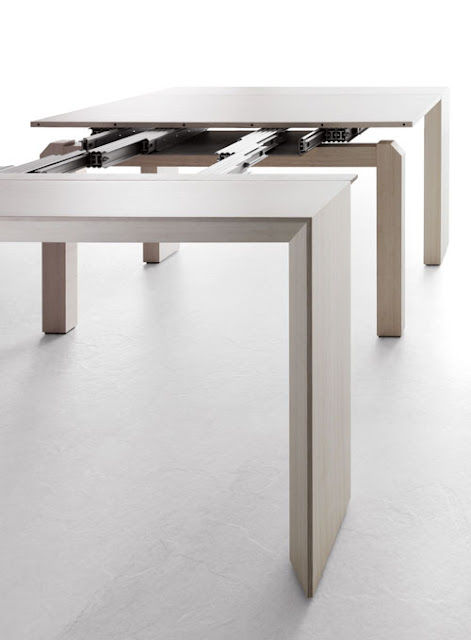
4. Minuetto Space-Saving Table

Produced by Italian manufacturer Milano Smart Living, this piece is great for anyone living in tight quarters. "It starts out as a console table but quickly transforms into a large dining table big enough to seat 10 people"--um, what?! That, my friends, is good engineering.


5. Folditure Leaf Chair

Created by architect Alexander Gendell, this chair folds to less than 3/4" thick and can be hung in a closet when not in use. With an aluminum composite frame and sturdy mesh seat, this durable chair is suitable for both indoor and outdoor use.


6. Twin Chair

This chair, designed by Philippe Nigro, is a clever two-in-one deal that allows a person to use the chairs stacked, or two people to use them separated--great for times when you need extra seating but can't afford to have chairs taking up space on a full-time basis.


Are you a small space dweller? Do you have a piece of space-saving furniture that has made your life a little easier? Leave a comment and let us know!

sources: one . two . three . four . five . six . seven . eight . nine . ten . eleven

Wednesday, August 29, 2012

Retail Security Solutions

Working in the retail fixture industry, Advanced Cabinet Systems fulfills numerous requests from customers wanting their displays to be as secure as possible. Would-be thieves are getting craftier and often times it seems that if a product is not nailed down, there is the potential that it will grow legs and walk right out of your store. If your security devices can be picked, cut, deactivated, or broken off, someone will find a way--resulting in a loss of profit for your business and loads of frustration for you.

In order to offer our customers the best security devices to meet an ever-growing list of needs, we try to stay as up to date as possible on what the market has to offer. Below are a few of our go-to products that we have found to be reliable options for combating retail theft. This may seem like a paid advertisement for one company, but trust me it's not, we just really like their products!

1. Invue Series 1000 Impact Display Stands
These stands feature an internal recoil mechanism that returns the product to the display position each time it is handled. It also has a built-in alarm that will sound if the device is disconnected from the stand--and speaking from experience, it is a loud alarm that no one in the store is going to miss! These stands provide users with a lot of flexibility, giving them the option to secure dummy phones, charge live phones, or provide customers with an interactive display that is triggered when the device is lifted from the base.

2. Invue Locking Gridwall Hooks
Many of our customers stock their accessories on grid wall panels, and these locking hooks from Invue are a great way to keep products secure, while still being quick and easy for employees to remove when necessary. 

3. Vanguard Cell Phone Security Stands
Similar to the Invue stands above, Vanguard Products Group offers a wide range of security options for hand held devices, tablets, and accessories. These devices offer the same user-friendly options when it comes to displaying products, while providing peace of mind that items are safe and secure.

4. Invue Cabinet Lock
Invue cabinet locks are great choice for retailers looking to retrofit existing cabinetry--with no tools or drilling required, installation is a snap. This lock features PowerTouch technology that transfers power from the key to the lock, meaning you will never have to worry about replacing batteries, providing years of worry-free security.

5. Invue LTO2 Tablet Security
New to Invue, this product can power up any tablet on the market while keeping it secure and functional when on display. The display stand allows the product to be mounted either vertically or horizontally, while remaining virtually invisible from the front--keeping product displays clean and uncluttered.

A large portion of my design work is geared toward the technology industry and I realize that is where most of these security solutions would be most useful. So, I would love to hear from you--what kind of security measures do you take to ensure that your merchandise doesn't fall prey to sticky fingers?

sources: one . two . three . four . five

Monday, August 20, 2012

Shipping Container Stores

As I was going through my undergrad schooling for interior design, the use of shipping containers as building structures was quickly gaining steam. Fast forward a few years (many of which I paid little attention to this trend) and I am admittedly behind the curve. However, over the past few months of work related research, several retail stores made entirely of shipping containers have flashed across my screen, and given the overabundance of really cool designs that they typically employ, I couldn't resist any longer in compiling a small list of a few of my favorites.

Reusing shipping containers is not only good for the environment, but is also a good option for retailers looking to save a few bucks, as they can typically be purchased for around $2000. They are also make great pop-up shops, offering a portable structure that is durable and easy to ship from one location to the next.

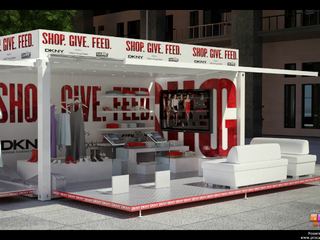
Mock-up of DKNY pop-up shop

Last year, DKNY offered a small sampling of its wares throughout Manhattan, housing them in a shipping container pop-up store. The need for a easy to set up (it took less than an hour!), portable design was critical to this project, as the store changed locations each day over the course of the three day event.

richard chai snarkitecture exterior
richardchaisnarkitectureinterior.jp

In 2010, fashion designer Richard Chai opened a pop-up store in Manhattan. Costing a mere $5,000, this location paired high fashion with flawless interior design.

The Starbucks Reclamation Drive-Thru

Starbucks Reclamation Drive Thru located in Tukwila, Washington has garnered a lot of attention since the 450 sq ft portable structure was constructed. Comprised of four salvaged shipping containers, it was designed specifically to explore new options in sustainability--showcasing the company's ongoing dedication to providing sustainable structures and business practices.

Ilan Dei pop-up shop in Venice

This shipping container houses the Ilan Dei Studio pop-up store and project lab, which opened in Venice, California earlier this month. The primary goal of this clean, modern design is to showcase the indoor-outdoor living of the California lifestyle. Three separate sections house a traditional lifestyle store, art gallery, and a community area for events such as yoga classes and ping pong games.

sustainable design, green design, shipping containers, shipping container architecture, Mexico, Container City, container restaurant, shipping container restaurant, recycled materials


shipping containers, shipping container architecture, Mexico, Container City, container restaurant, shipping container restaurant, recycled materials

One of my all time favorite use of salvaged shipping containers is Container City located in Cholula, Mexico. Restaurants, galleries, bars, stores and living spaces occupy the nearly 50 colorful containers carefully arranged to form courtyards, alleys, and streets.

The possibilities are endless when it comes to employing recycled shipping containers in design. From temporary pop-up stores to permanent cities, these structures provide a durable, eco-friendly alternative to conventional construction methods. This is one craze that has definitely caught my attention, and I anticipate it hanging around for many more years to come!

sources: one . two . three . four . five . six . seven
Monday, August 13, 2012

Building Information Modeling

In June, Advanced Cabinet Systems announced the release of their Revit Families Catalog. This was a significant step for the company in providing resources that meet the ever-changing demands of technology in the architectural community, while also allowing ACS products to be integrated into their drawings. In light of this release, I wanted to take a look at Building Information Modeling (BIM) and how it is helping to change the face of building construction.


The National Building Information Modeling Standard Project Committee (try saying that three times fast), defines BIM as "a digital representation of physical and functional characteristics of a facility. A BIM is a shared knowledge resource for information about a facility forming a reliable basis for decisions during its life-cycle; defined as existing from earliest conception to demolition." Now, after reading that definition I was still a little in the dark about what BIM actually was, so in case you are too, hopefully the rest of this post will clear it up a little better...


Building Information Modeling goes beyond the standard 2D drawings often used in construction, and renders the entire space in 3D--while also allowing the user to see the time and cost associated with each phase of the process. This allows for quick extraction of different views of the building, saving time and resources that would otherwise be spent on the drafting table, and allowing the project to proceed without delay. If problems are detected within the drawing, elements can be easily changed while also maintaining an updated schedule of materials for ordering and tracking purposes.


Another major benefit of BIM is the ease of which a job can be handed off from one person to the next. Gone are the days of having to keep track of page after page of changes and revisions, with BIM each worker adds to a single drawing file and hands it down to the next--lowering the potential that information will be lost in the process and reducing the chance that costly mistakes will be made as a result.


With tight schedules and budget constraints, Building Information Modeling helps architects, builders, and designers work quickly and efficiently by allowing them to visualize the space from start to finish. This allows them to work out any potential problems before construction even begins; saving valuable time and resources, and often leading to projects that finish ahead of schedule and under-budget.

sources: one . two . three . four

Friday, July 6, 2012

Selecting Flooring and Paint

Flooring and paint selection are two elements of retail design that when chosen correctly can save you a lot of headache down the road. It is important to specify finishes that are commercial grade and will hold up well in a retail setting. While the initial investment for commercial materials may be higher, the cost will eventually even out--and in some cases even be lower--in comparison to purchasing non-commercial grade products, as they will often need replaced sooner. This is a key component in making sure the money you spend upfront implementing your design is not wasted on fixtures and finishes that are not meant to withstand retail traffic. The materials you choose should not only look and function well, but have minimal maintenance requirements.

Flooring

There are several things to consider when choosing flooring for your store...
  1. What kind of mood are you trying to set? Commercial flooring companies now offer their products in a wide range of colors and materials. Gone are the days of traditional floors in neutral colors, as designers are making flooring an important part of the design concept with bold colors and patterns.

    Colorful Floors
  2. How much foot traffic will the flooring get? Durability is vital in choosing a commercial grade floor covering as the product will often need to withstand a large number of customers each day. If possible, choose a flooring that is easy to clean and hides dirt and scuffs well. Consider investing in carpet tiles--as individual squares can quickly be replaced should the need arise--but make sure to purchase enough replacements from your original dye-lot as colors can often vary from one lot to the next.

    wood_big
  3. How much standing will my employees and customers do? If the answer is a lot, it is important to choose a material that will help to reduce fatigue and potential leg and back pain. As a general rule, the less amount of give that a surface has, the harder it will be on your joints. Choosing a softer flooring with a little bit of give to it will greatly benefit employees that need to stand all day. If you are dead set on having, say, exposed concrete floors, do your employees and customers a favor by adding anti-fatigue mats in areas that they will be standing at most throughout the day. Trust me, they will thank you!


  4. Is noise an issue? If so, stick with softer finishes that will absorb the sound of footsteps or invest in a good underlay that will help quiet walking noise on laminate or hardwood floors.

    Interior decorating carpets decor
Paint


Paint comes in a wide variety of finishes that can either work for you or against you. Choosing the correct finish for your walls and fixtures will ensure that they are easy to clean and will not need repeated touch ups or repaints that are both time consuming and costly.
  1. Matte/Flat: This is the least glossy finish which makes it a great choice for covering existing wall colors or hiding imperfections. It is very susceptible to stains and scuff marks and does not hold up well against scrubbing, therefore it is best applied to ceilings and low traffic areas. 
  2. Eggshell and Satin: These finishes have a hint of glossiness compared to flat, with satin being the glossier of the two. They are durable and easy to clean making them a good choice for walls in nearly every type of setting. 
  3. Semi-Gloss: Even glossier than eggshell and satin, this finish offers great durability in high-traffic areas that will receive heavy cleaning regularly. Semi-gloss is a great choice for cabinets and trim, as well as high moisture areas such as restrooms and kitchens. 
  4. Gloss: Drying to create an almost laminate-like surface that is extremely durable, this finish is not typically used in interiors. 
sources: one . two . three . four . five

Tuesday, June 26, 2012

Chicago NeoCon 2012


By: Anna, ACS Intern


Located at the Merchandise Mart in Chicago, NeoCon is North America's largest design exposition and conference for commercial interiors. This year's event was my first chance to attend this incredible expo as a student designer. I was able to see thousands of innovative products and resources for all areas of commercial design. With more than seven hundred showrooms it was overwhelming, but there was so much to discover and learn. 


Arriving at NeoCon, the show room I was most interested in seeing was that of Herman Miller--I had a feeling their products would be presented in a beautiful and grand way and they did not disappoint. Along with the presentation of their newest concepts and designs, there was an excellent exhibit depicting the work of Alexander Girard. Girard was the Director of Design in the textile division at Herman Miller and held this position from the early fifties to the late seventies. His timeless designs were featured throughout the show room on artwork and upholstery displaying his ever modern work. 


The vast number of showrooms and products presented at NeoCon is far too much information to process in two days, and though much what I saw remains a blur, there were some specific trends that stood out to me: 

The first trend was felt. I have never seen this material incorporated into any commercial interiors, but at NeoCon felt was applied to flooring, furniture, acoustical panels, and numerous other products. Its use seemed limited only by the designer's imagination. FilzFelt is a distributer of wool design felt, and was the featured provider in several of the show rooms utilizing the material. The FilzFelt company has a large focus on custom fabrications in both the commercial and residential markets. 


Another trend that stood out was the repeated use of white boards within work spaces. While this is not a foreign idea to most collaborative work environments, I saw it used in several unique and innovative ways. Idea Paint was featured in several show rooms for their white board wall covering. They provide a finish that can be applied over any paint color, turning the space into a collaborative one. This is a creative way to encourage your employees to work together that is low cost and has little impact on the environment.  

A concept that was prevalent throughout the show was "more talk, less technology". This is the idea that technology has taken over social interaction and we need more face to face discussion and collaboration within the office in order to grow more complex, innovative ideas. This theme was largely reflected in the product design throughout several of the showrooms, and products such as Buzzy Booth’s, as well as collaborative work stations by Herman Miller and Hon all supported this movement back to literal collaboration.


NeoCon not only had great things to observe, but excellent hands on activities as well. At the ASID (American Society of Interior Design) booth there was an opportunity to design a pair of TOMS shoes that would later be distributed to children in need within the Chicago area. After hearing about this activity I could not pass up the opportunity and was able to design a small pair of shoes for a young boy. It was touching to see so many skilled designers coming together around a common cause and doing something to help those in the city around us. 


My experience at NeoCon was a great one. As I learned and observed throughout my two days there, I gained knowledge about products, companies, and materials that I will be able to apply in my future designs. My experience left me wanting to come back for more and I will surely be there next summer to do it all again at NeoCon 2013.